- Test reference
- TF-HW-001
- Date
- 29 August 2026
- Duration
- 4 hours
- Status
- Complete
- Data retained
- Yes, held in Continuum Core
Hardware that reads a product where it is stored lets a business see its stock at every site, and it saves the time staff spend collecting readings by hand. Terrafa is developing its own AI-embedded hardware, built on infrared spectroscopy and graphene, and published work shows that infrared spectroscopy can determine the chemical composition and physical properties of diesel1. This record describes Terrafa's first laboratory test of an early prototype, which read a diesel sample and sent every reading wirelessly to Continuum Core in under a second. The aim was to show that readings from a diesel sample can arrive in Continuum Core continuously for a set period. The test ran for one hour. Further tests will find how long the hardware runs before a fault.
Test set-up
A diesel sample was collected at the pump and stored in an airtight aluminium container. The prototype read the sample on the bench once a second. Each reading travelled as a single message over a private network connection to Terrafa's data store, and from there into Continuum Core.
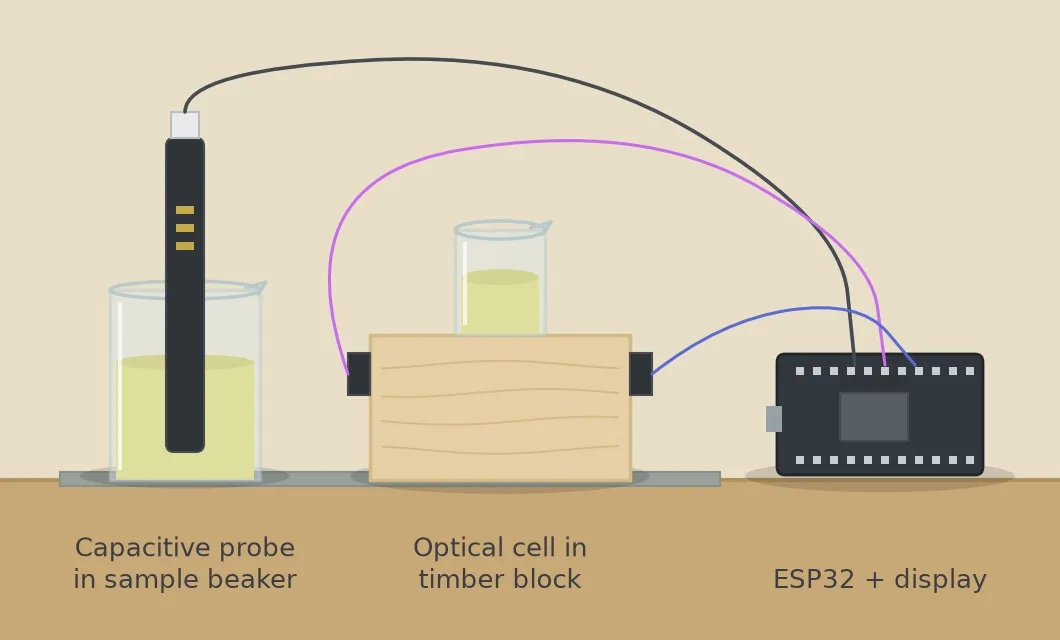
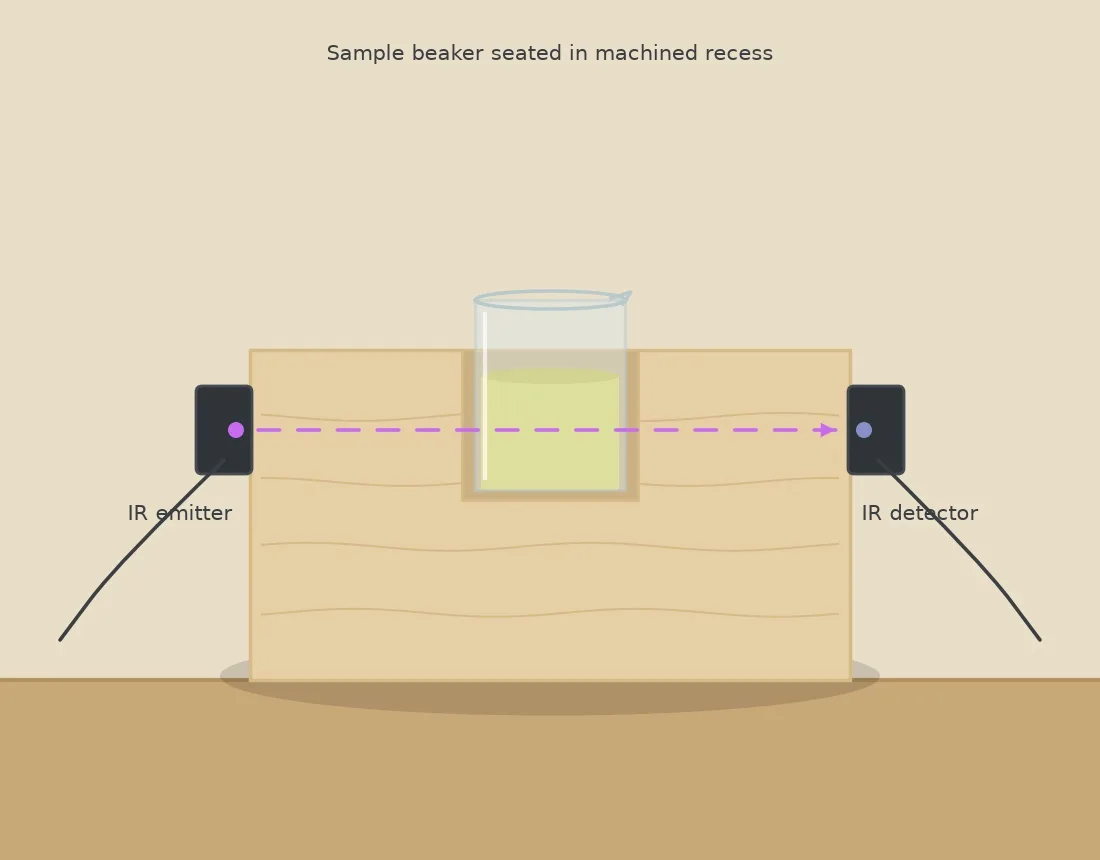
| Item | Description | Amount | Note |
|---|---|---|---|
| Sample | Diesel collected at the pump | One sample | Kept in an airtight container |
| Hardware | Early AI-embedded hardware prototype | One unit | Bench test only |
| Connection | Private wireless network to Continuum Core | Live | No manual transfer |
Table 1Test summary. The sample, the hardware and the connection used in this session.
Results
Local display
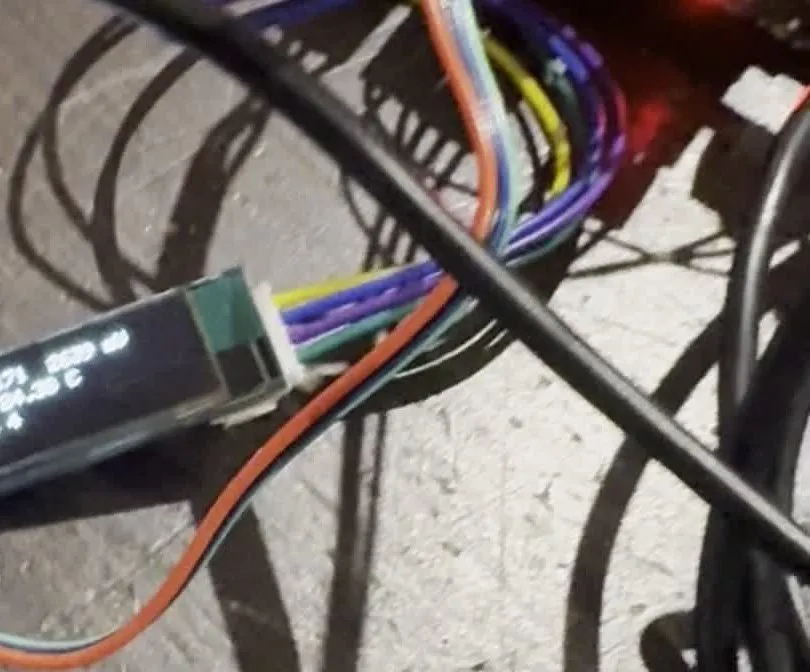
The local readout during the run is shown in Fig. 4.
Readings
The run is summarised in Table 2. Every reading arrived in Continuum Core.
| Run item | Unit | Start | End | Notes |
|---|---|---|---|---|
| Run time | minutes | 0 | 60 | One continuous run |
| Reading rate | per second | 1 | 1 | |
| Messages lost | count | 0 | 0 | |
| Delivery | mode | Live | Live |
Table 2Run log. This table gives the run time, reading rate and delivery for this session.
Arrival in Continuum Core
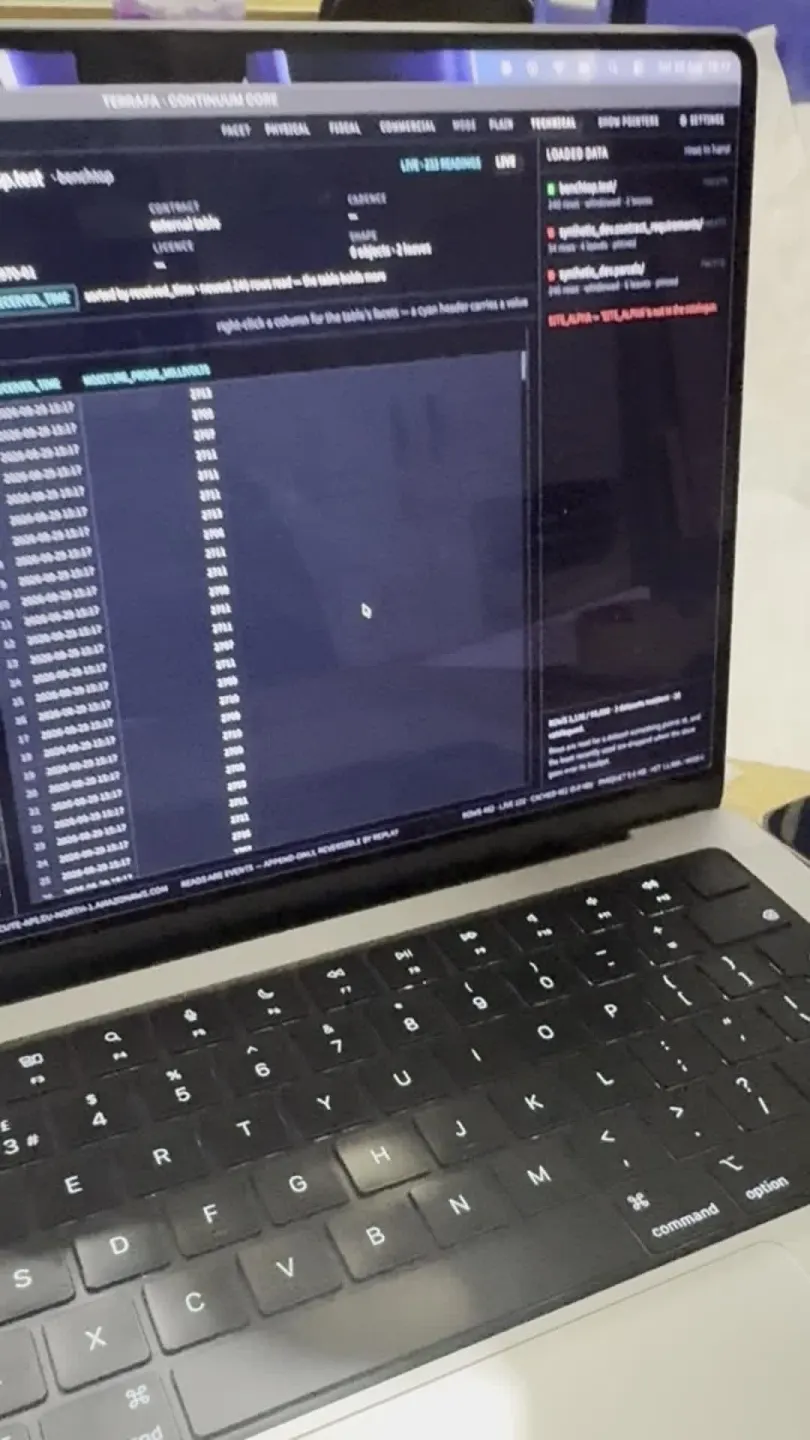
Rows arrived in the Data Sources catalogue while the hardware ran (Fig. 5).
Observations
The prototype ran for one hour, and no messages were lost. Rows arrived in Continuum Core one by one as each reading was taken, so the connection carries a live feed.
Development
The prototype sends its readings over a private wireless network to Continuum Core. The data path from sample to database is shown in Fig. 1.
Hardware
The team built a bench fixture that holds a sample in the same place for every run. It is the first fixture Terrafa holds for repeatable bench tests, and the prototype shows its readings on a local display.
Firmware
The firmware takes each reading, shows it on the local display and sends the same value to Continuum Core. It is written in C++.
Software
The Terrafa Data Feeds application receives readings from the hardware and streams them to the Continuum client. Both applications are written in C#, with samples available in the Continuum Data Feeds repository on GitHub.
Conclusions
- An early AI-embedded hardware prototype can run and send readings continuously on the bench.
- Readings pass from the hardware into Continuum Core as a live dataset, and nobody has to move data by hand.
Future work
- Controller. The bench test used a general-purpose controller. Longer tests will run on industrial-grade controllers built for continuous use.
- Terrafa's own hardware. This early test used standard parts. Terrafa is developing its own AI-embedded hardware, built on infrared spectroscopy and graphene, for use at customer sites.
Photograph log
Figures 2 to 5 form the photograph log for this session.
References
- Hradecká, I., Velvarská, R., Dlasková Jaklová, K. & Vráblik, A. Rapid determination of diesel fuel properties by near-infrared spectroscopy. Infrared Phys. Technol. 119, 103933 (2021). https://doi.org/10.1016/j.infrared.2021.103933